MCP & A2A
Link
Khái nhiệm và kiến trúc
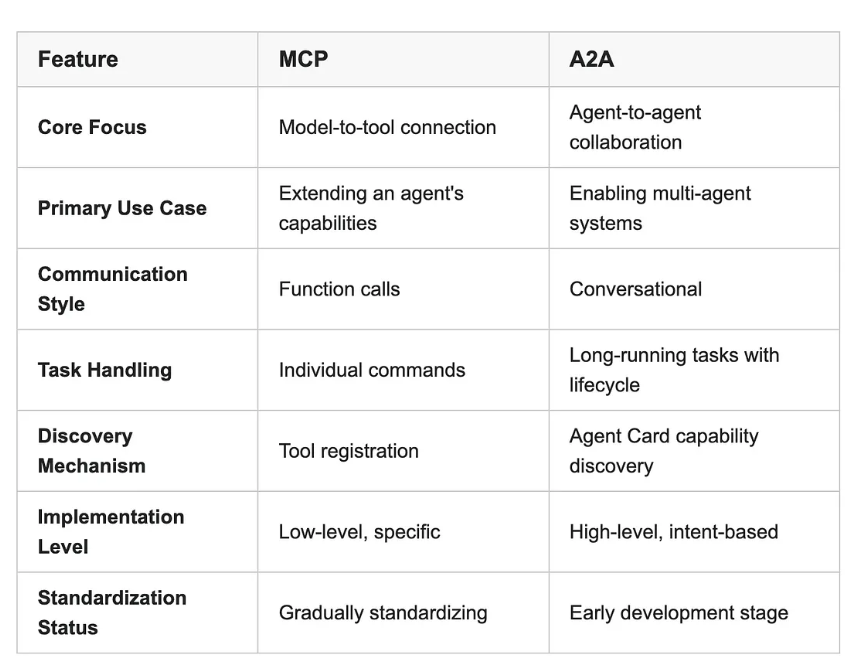
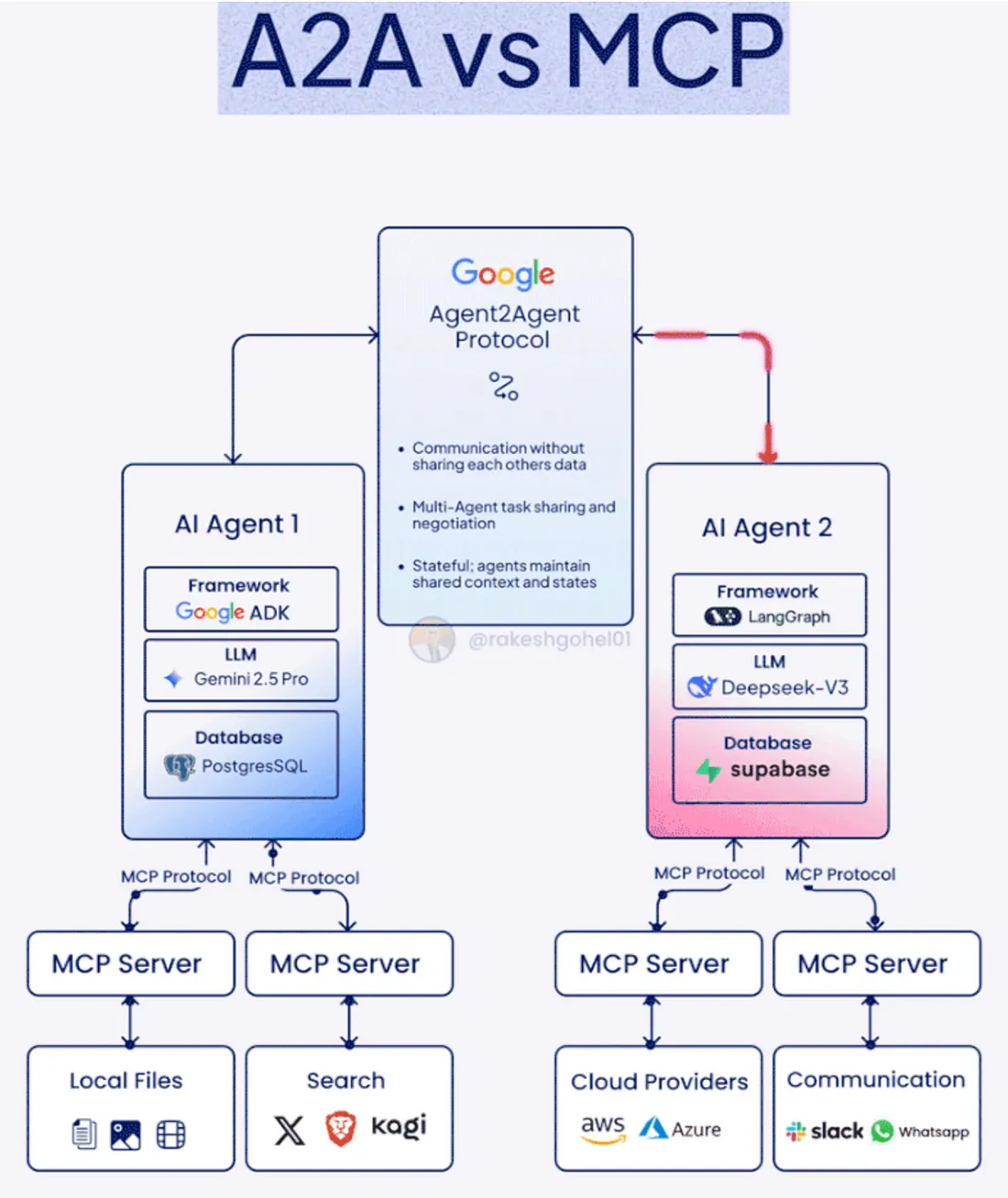
Agentic MCP (Model Context Protocol) is a protocol that helps AI models, like chatbots, connect to external systems such as databases or business tools. It’s like giving the AI a set of tools to fetch information or perform tasks during a conversation, making it smarter and more helpful.
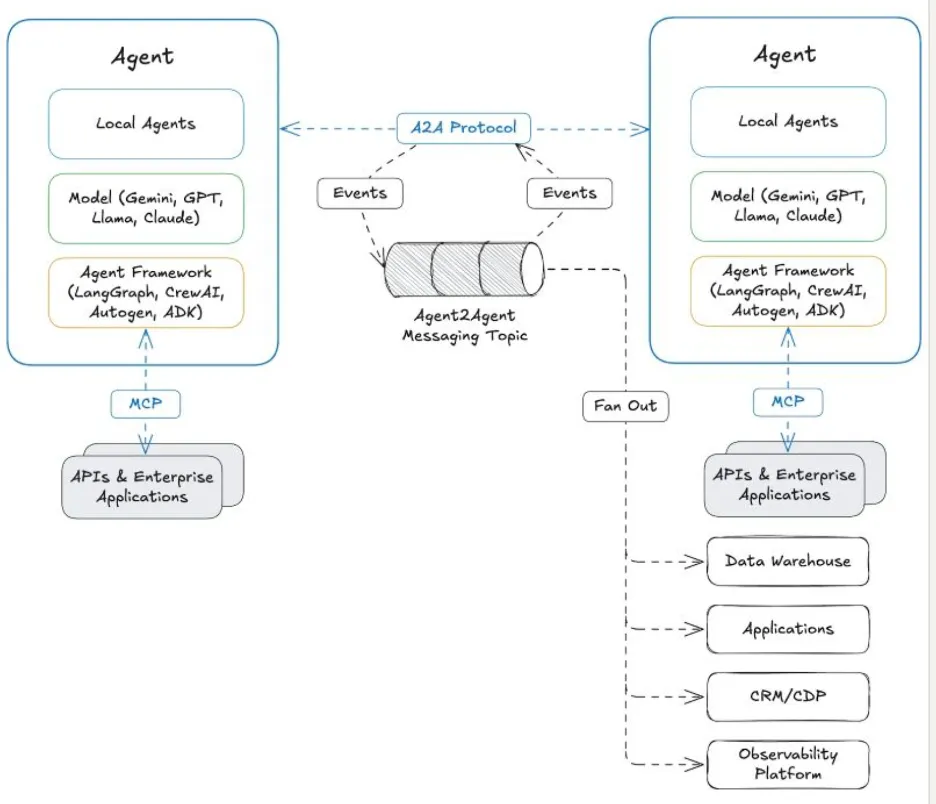
A2A (Agent-to-Agent) Architecture is about letting different AI agents talk to each other. Imagine a team where each agent has a job, like one handles customer queries and another manages tickets — they can work together smoothly using A2A.
MCP
Core Components
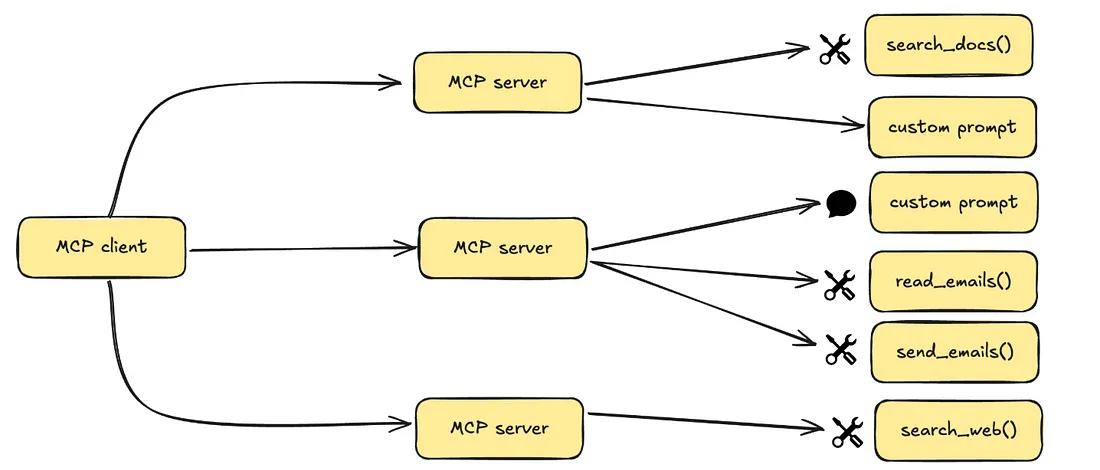
MCP follows a client-server architecture with the following key components:
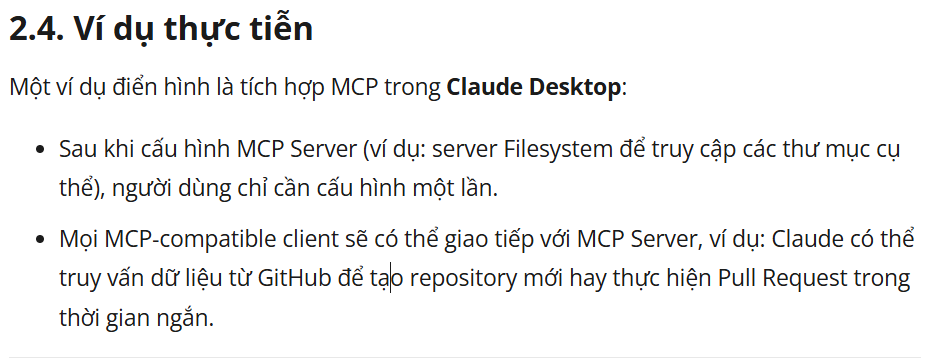
- MCP Hosts — Programs using LLMs (like Claude Desktop or IDEs) that initiate connections to access external data and tools
- MCP Clients — Protocol clients embedded within the host application that maintain 1:1 connections with servers
- MCP Servers — Lightweight programs that expose specific capabilities through the standardized protocol
- Data Sources — Both local (files, databases) and remote services (APIs) that MCP servers can access
Works
MCP standardizes three main types of capabilities:
- Tools — Functions that can be called by the LLM (with user approval)
- Resources — File-like data that can be read by clients (API responses, file contents)
- Prompts — Pre-written templates to help users accomplish specific tasks
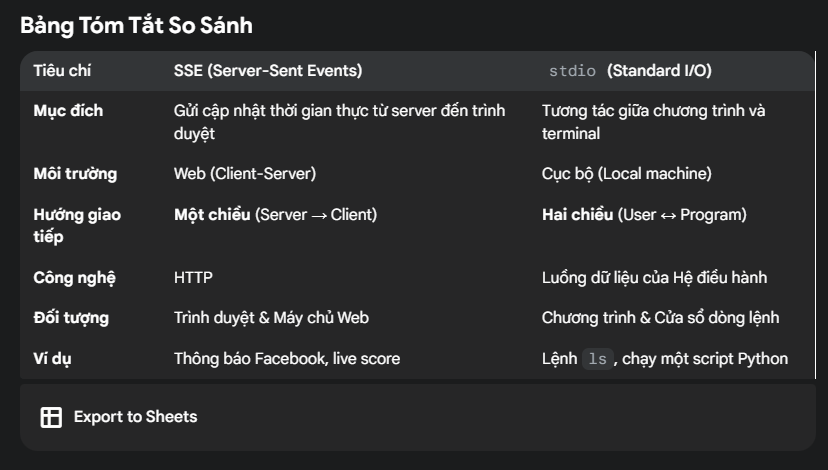
SSE & STDIO
A2A Architecture
Core components
A2A architecture centers around facilitating communication between agents with these key components:
- Client Agent — Formulates tasks and communicates them to remote agents
- Remote Agent — Acts on tasks to provide information or perform actions
- Agent Card — JSON metadata file describing an agent’s capabilities and endpoints
- Task Management — Defines task objects with lifecycle stages and outputs
- Messaging System — Allows agents to exchange context, replies, and artifacts